Advanced paint sprayer troubleshooting: The Contractor’s Guide to Zero Downtime
When a machine dies on the job site, every minute of idle time burns money. Fast and accurate paint sprayer troubleshooting is critical for contractors to survive.
This guide provides the exact mechanical diagnostics needed to fix pump failures and restore pressure immediately, preventing disastrous project delays and expensive material waste.
The Pain: The Real Cost of a Sprayer Pump Not Working on Site
If equipment is not properly suited for the job, quality issues and equipment failures can result, often leading to budget overruns, schedule delays and unhappy customers.
Pump packing failure is a significant contributor to the disruption of operations and unplanned machine downtime. Systems operate from standard 3000 PSI / 20 MPa to heavy-duty industrial maximum pressures of 6000 PSI / 40 MPa and even 9000 PSI.
Because glue and paint dry and harden inside mechanical seals commonly seen in pumps, it makes them vulnerable to breakdowns that lead to costly production downtime.
A heavy-duty airless high-pressure hose is built to withstand the rigors of high-pressure spraying, reducing downtime from hose failure.
Does your machine refuse to prime, or does your tip repeatedly block? From research, we know that in most cases, the cause is due to lack of maintenance.
Diagnostics: Why Your Airless Spray Gun Won’t Stop Spraying
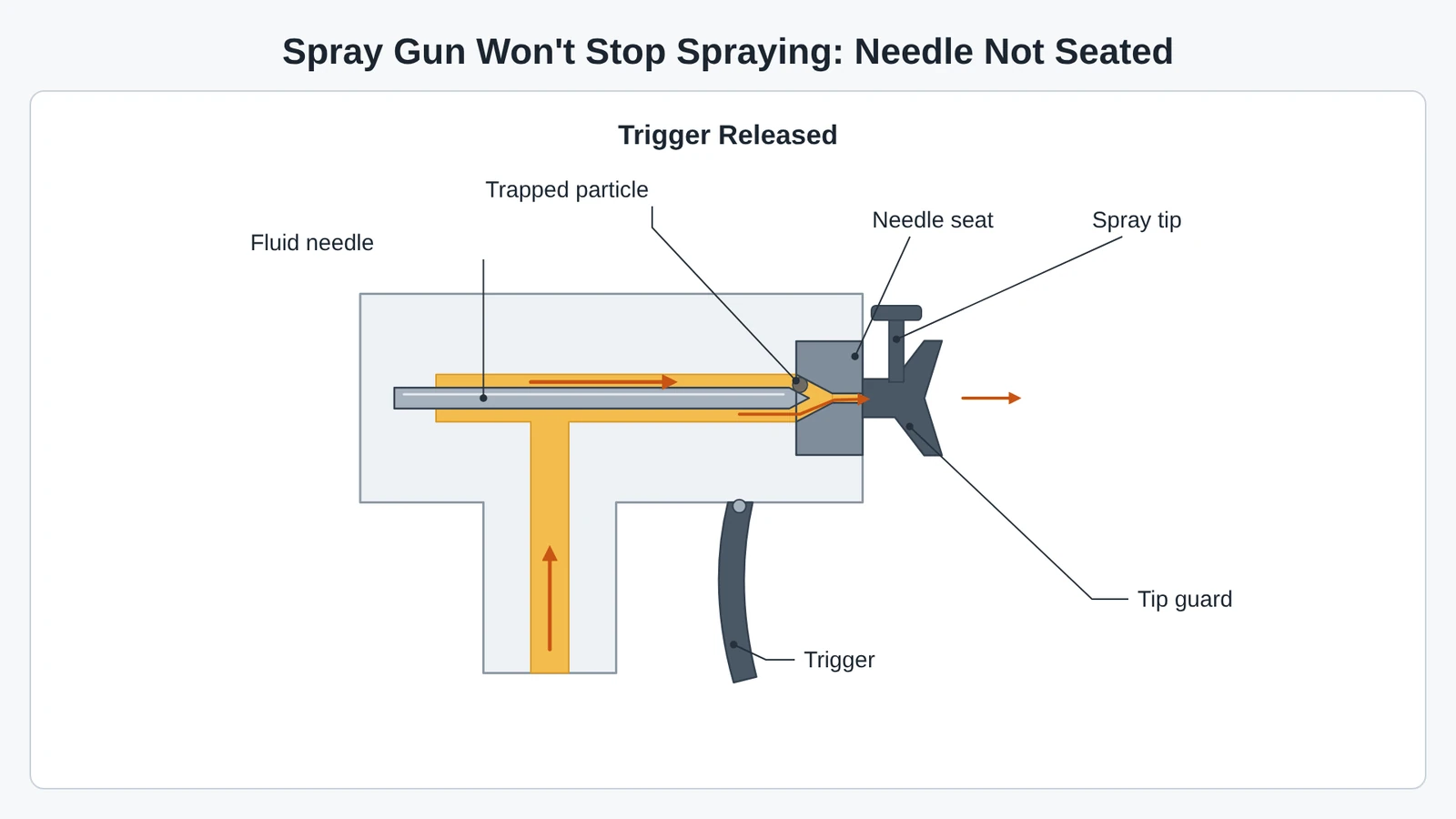
If your airless spray gun won’t stop spraying, leakage of fluid is caused by improper seating of the fluid needle. This is due to:
- A worn or damaged fluid tip or needle
- Dirt particles lodged in the fluid tip
- The packing nut being too tight
- A broken fluid needle spring
- A wrong size needle or tip
A clogged tip stops the sprayer from spraying effectively—if it sprays at all. Outlet check valve not seating properly is another cause, so clean the check valve.
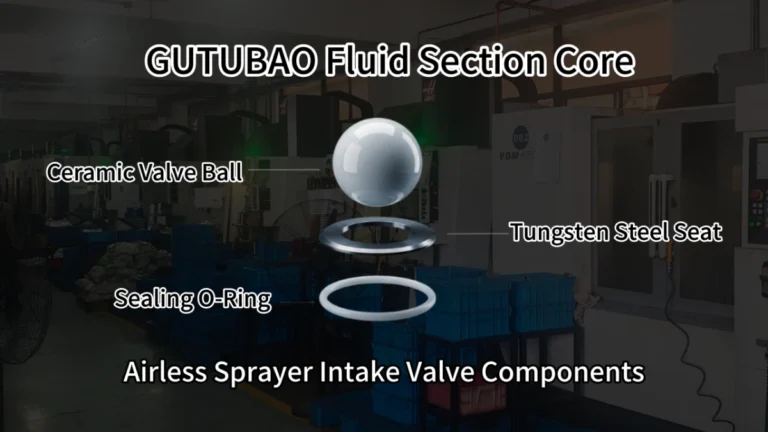
Low-grade guns wear out fast, but professional-grade hardened stainless steel and tungsten steel components provide durability against high-viscosity materials.
Long-life ceramic and stainless steel balls are included for maximum versatility. The enclosed-needle design shields the needle from fluid exposure for consistent shut-off and longer needle life.
Fluid pushes on the seal to quickly shut off the needle and reduce spitting. The factory-set needle needs no trigger adjustments. Always remove paint by washing with solvent.
Pressure Drops & Fluid Pump Failure: Step-by-Step Fixes
When pressure drops occur, the displacement pump operates, but output is low on the upstroke. This happens because the piston ball check is not seating properly due to:
- Piston or suction ball wear
- High-pressure line blockages
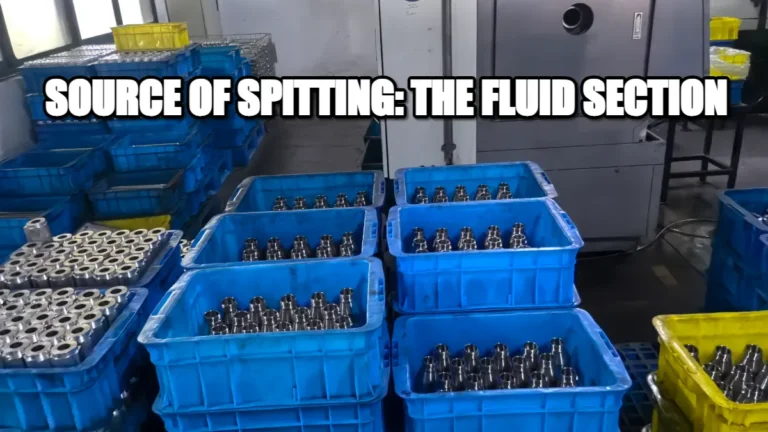
The same ball-seating failure often surfaces first as sprayer spitting and pressure drop at the gun before output collapses.
Before operating your sprayer for the first time, or any time, always perform the pressure relief procedure to ensure your sprayer is de-pressurized, and turn the prime valve to the PRIME, or DRAIN, position.
For over night shutdown, stop the pump at the bottom of its stroke to prevent fluid from drying on the exposed displacement rod and damaging throat packings.
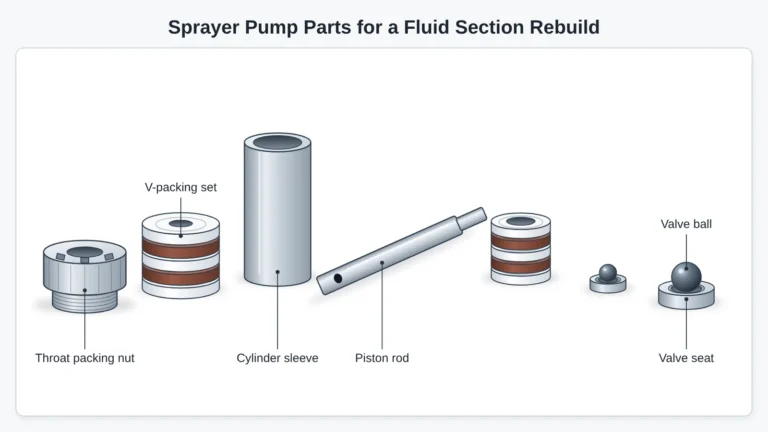
Check the packing nut, adjust packings and replace TSL as necessary, and torque to 25-30 ft/lbs. TSL keeps paint from drying on pump components.
To prevent dry friction from destroying the pump, explicitly add 3-5 drops of special lubricating oil to the plunger pump seal before every startup.
Extend the life of your sprayer by using the right maintenance fluids. Thorough flushing with clean water is critical for proper performance, and use a sponge ball sized to your hose diameter to clean and flush hoses after each use.
The Rapid paint sprayer troubleshooting Matrix
| Symptom | Root Cause | Component to Check | Immediate Action |
|---|---|---|---|
| Motor powered but nothing comes out of hose | Pump is packed out with dry or cured material | Obstruction in fluid passage | Backflush with solvent and clean suction valve ball |
| Pressure drops during operation | Piston or packings worn or damaged | Piston packings and high-pressure seals | Replace the piston packings and replace worn high-pressure seals |
| Fluid leaking or dripping from front of pressure feed gun | Foreign matter on the fluid tip or needle seat | Fluid tip and needle | Backflush with solvent |
| Electric motor will not start or stops during operation | Relay is in the down position | Electric motor | Check the motor and the electrical supply, and confirm the pressure setting on the control panel |
Red Lines: Chemical Reactions and Lubrication Warnings
Airless spray equipment users should read all warnings and should follow all safety precautions to prevent equipment downtime.
Do not spray or clean with liquids having a flash point of less than 100ºF (38ºC), because flash point is the temperature at which a fluid can produce enough vapor to ignite.
Pressurized aluminum components strictly prohibit the use of 1,1,1-trichloroethane, methylene chloride, or halogenated hydrocarbon solvents, as they will cause a violent chemical reaction leading to equipment rupture.
The system will spray both water and oil-based coatings. Use water for water-based materials and mineral spirits for oil-based materials.
Flush at the lowest pressure possible, and flush with a fluid that is compatible with the fluid you are pumping and with the wetted parts in your system.
Dried fluid on the displacement rod or inlet ball causes failure, so always stop the pump at the bottom of its stroke and keep the wet cup filled with TSL. If the entire gun is put into solvent, the dirty solvent will be forced into the gun air passages.
Fluid Dynamics vs. Wear: Why Cheap Packings Fail Early
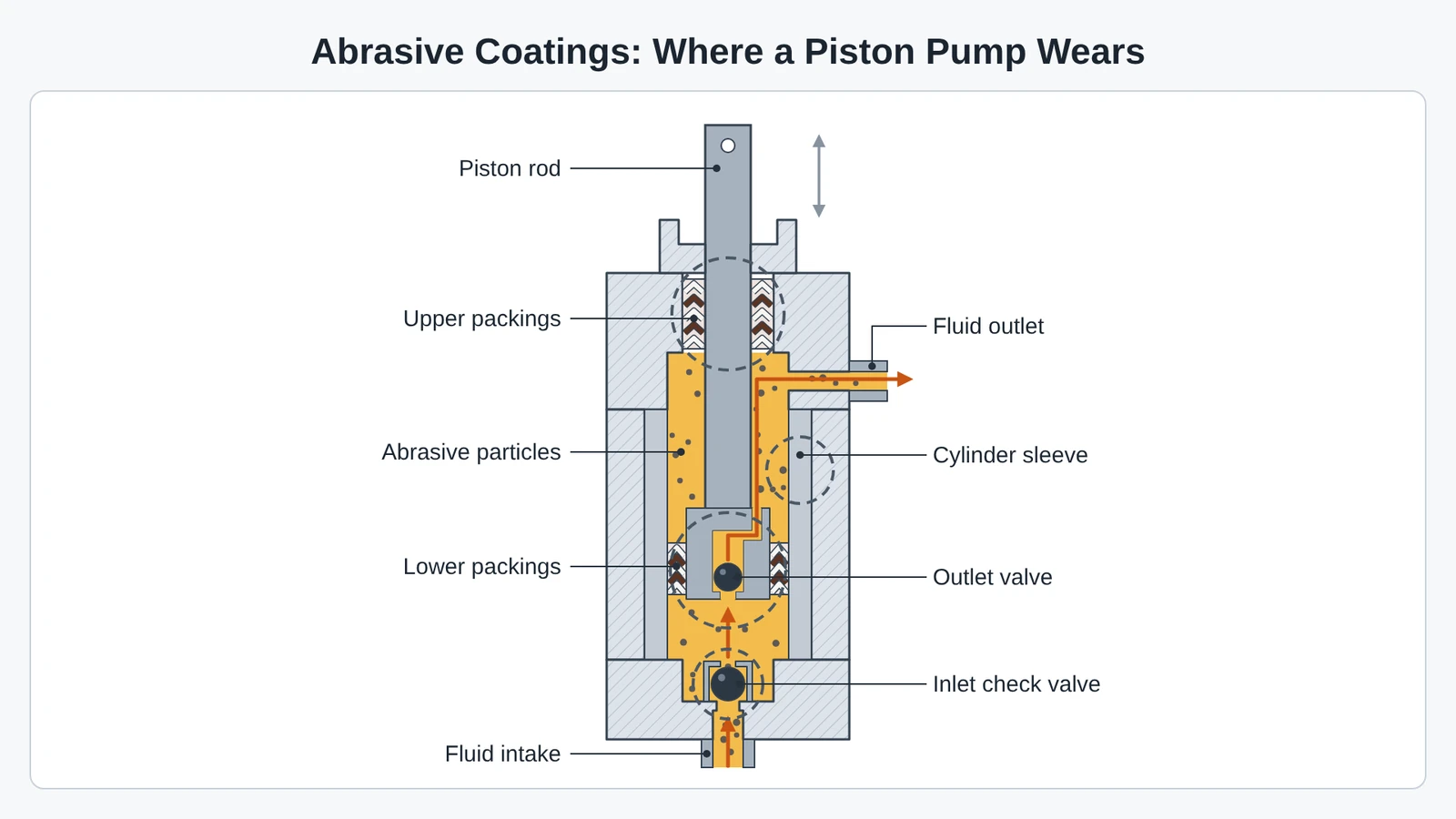
The fluid pump handles abrasive materials such as 100% pure epoxy coatings, heavy asphalt, non-skid coatings, or cementitious materials, and tackles difficult polymers with fillers such as glass flake, silica or sand.
Systems support extreme flow rates spanning from 1.0 L/min to a maximum of 60.0 L/min.
To survive this, the extended piston stroke design increases the wear surface and improves hard-part life for longer pump life.
Lower-grade packings fail early, but GUTUBAO uses Premium UPE and natural Cowhide V-Packings with a hardened stainless steel cylinder. Top-tier clients can opt for high-durability ceramic-coated components.
Long Life ceramic and stainless steel balls are included for maximum versatility. Our abrasion-resistant composite delivers a durable wear surface, and long-lasting needle packing holds up well with abrasive material.
The brushless motor delivers high sustained torque, runs cooler under continuous load, and has no brushes to wear — reducing maintenance downtime.
Stop Repairing, Start Replacing: OEM Pump Assembly Upgrades
To keep your jobs moving and on schedule, always make sure you have a Genuine GUTUBAO replacement pump on hand.
The days of spending time and effort cleaning and rebuilding the fluid section of your spray gun are gone.
Professional grade pumps are easy to replace and often can be swapped out in just a few minutes, with no special tools. Fast, on-the-job pump replacement keeps you spraying longer between service intervals.
Repack the pump in minutes with our cartridge system, and spare cartridges can replace your back-up guns. Stop repairing and start replacing by partnering with a true OEM pump manufacturer.
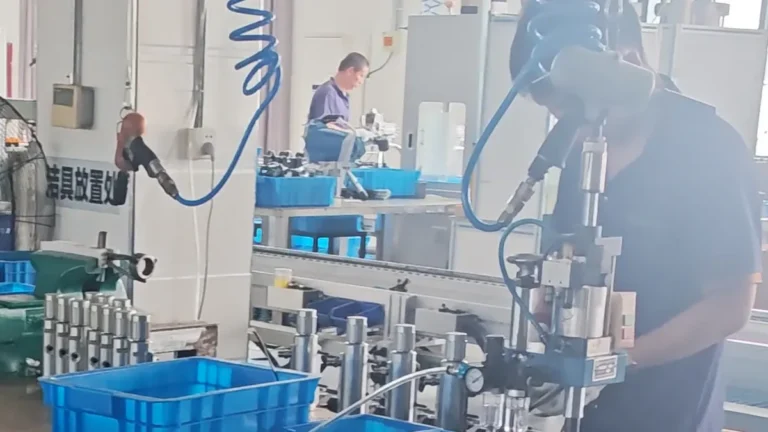
Our factory boasts an 18,000 square meter facility equipped with over 200 CNC machining centers, delivering an annual capacity of 100,000 units.
Pump bodies are machined using Japanese Brother SPEEDIO for automated one-step flipping and American Haas for synchronized double-hole boring. Every unit undergoes rigorous 0.01mm tolerance inspection using German Carl Zeiss CMM.
All products are CE-certified under the Machinery Directive 2006/42/EC (EN 60204-1:2018, EN ISO 12100:2010).
We fully support deep OEM/ODM manufacturing under strict NDAs.