The Ultimate Guide to Thinning Latex Paint for Airless Sprayer
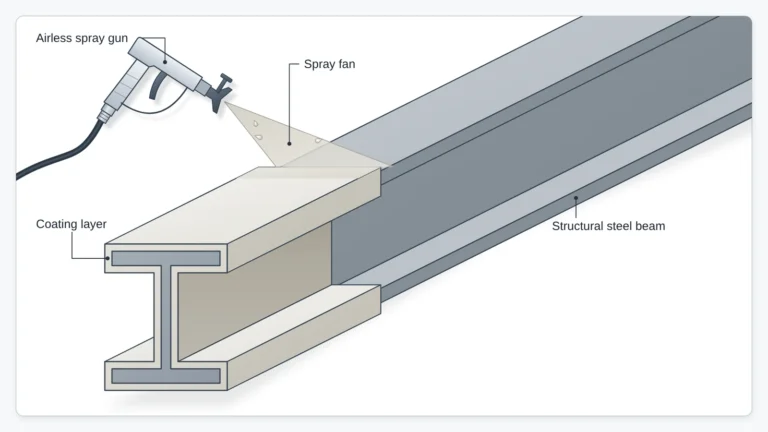
Mastering the process of thinning latex paint for airless sprayer is the secret to achieving a professional, streak-free finish. Whether you handle occasional repaints or daily professional work, understanding fluid viscosity and pressure settings is essential to avoid common pitfalls like airless paint sprayer tails and ensure your equipment performs at its peak.
The Core Logic of thinning latex paint for airless sprayer
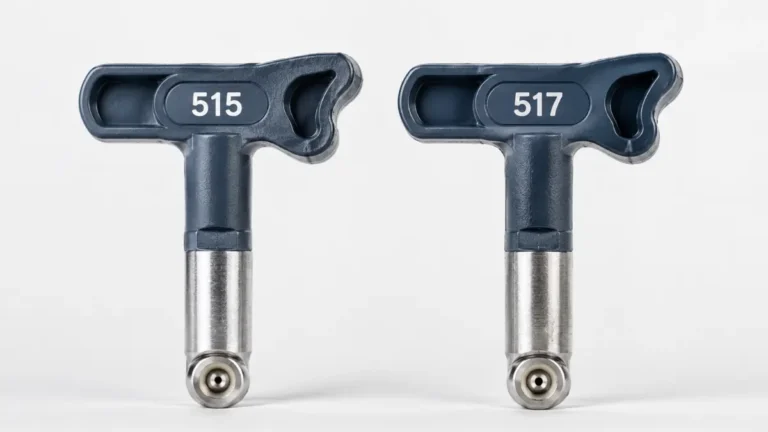
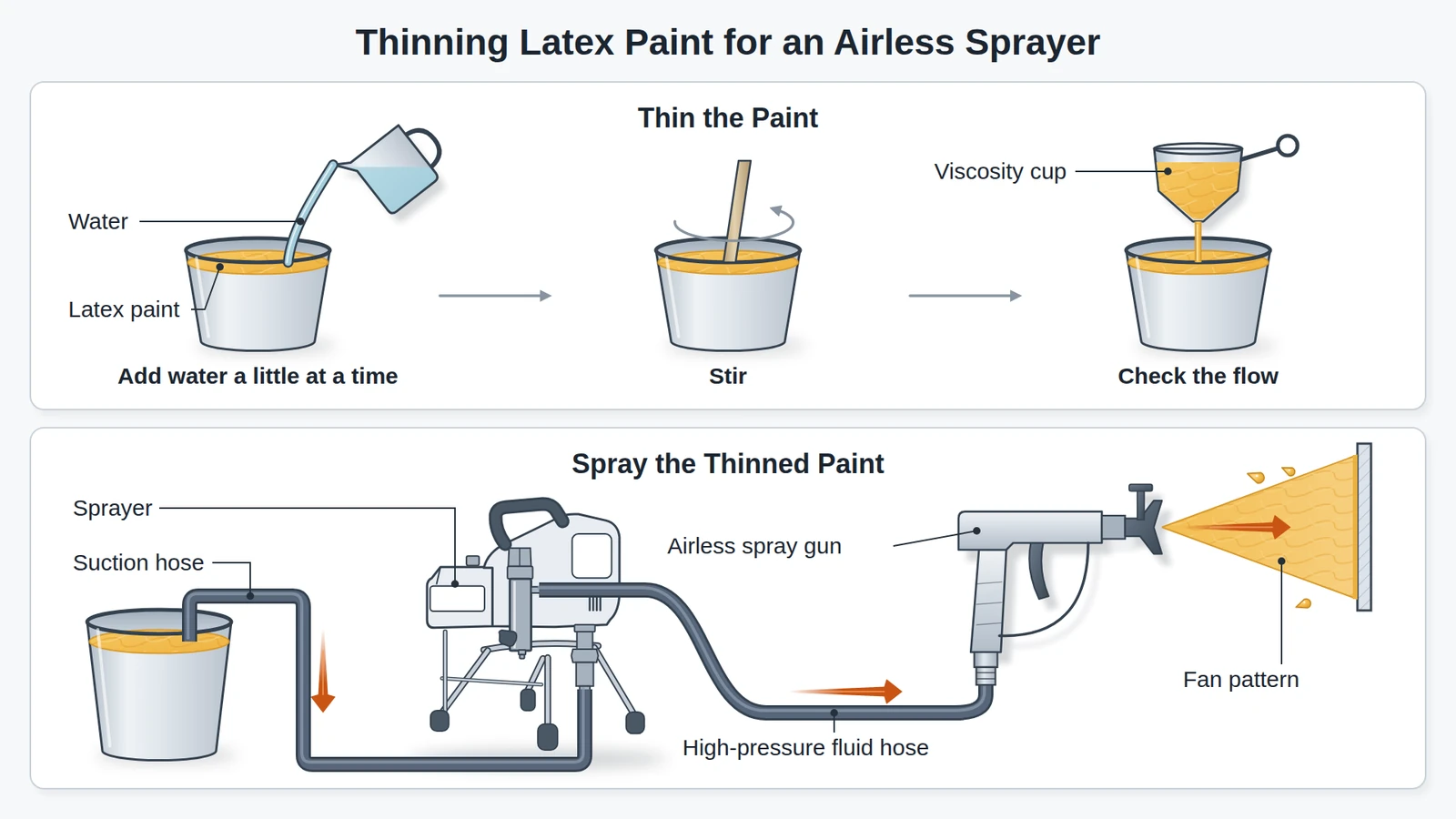
When evaluating the process of thinning latex paint for airless sprayer, the bottom line is to thin only as much as needed for clean atomization. For airless spraying, the workable high-shear viscosity is roughly 50–500 cP (optimum near 100 cP); in practice, thin in small increments and check with a Ford #4 viscosity cup until the paint flows in a smooth, unbroken strea. To choose the right tip for your spray project, heavy Interior/Exterior Latex coatings require a 0.015″ – 0.021″ orifice, matching the 515 or 517 sizes.
Viscosity control matters most on fine-finish work, where atomization defects show on the first pass — our guide to the best airless sprayer for cabinets pairs that demand with the right tip and pump.
When you spray, hold the gun exactly 12 inches (30 cm) from the test surface, keep it at a 90 degree angle, and overlap your passes by approximately 50%. Airless spraying is the fastest and most versatile way to spray the widest variety of materials, achieving zero-dilution on unthinned 100% acrylic exterior coatings when using a high-power pump delivering > 1.8 L/min.
Why Do airless paint sprayer tails Occur? (Diagnostics & Physics)
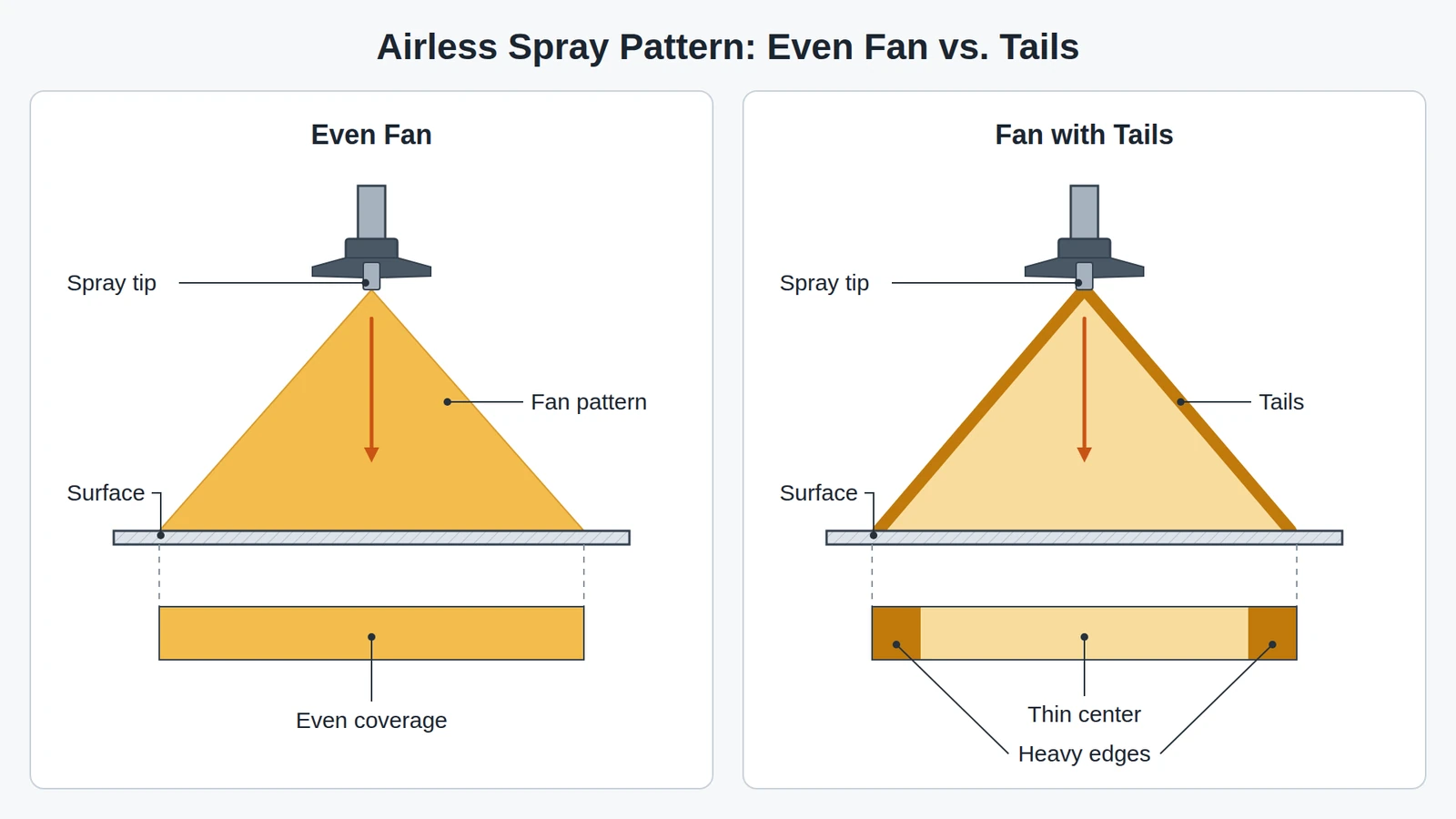
If the pattern has heavy edges, often called tails or snake head, it indicates a fluid mechanics failure. One primary core trigger is when the pump experiences erratic Dead band pressure fluctuations. Because all coatings contain solids that are abrasive, a 10-inch fan pattern worn to an 8-inch width causes fluid overload and defective tailing.
You must change to a new correct-sized tip to restore precise fan control. The 60-mesh or 100-mesh gun filter, along with the manifold filter, is designed to catch debris, so a physical clog here will severely impact your finish quality.
How to increase pressure airless sprayer and Clear Clogs
Always turn the pressure control to the lowest setting, then gradually climb to the 3000 PSI / 207 Bar threshold to achieve a soft, blendable spray pattern without excessive overspray. As 1/4 in x 50 ft hose lengths increase, the friction pressure drop increases by adding another 50 ft, meaning additional pumping pressure is needed.
Before cleaning your sprayer, always perform the exact Pressure Relief Procedure, followed by a high-flow cleaning cycle or bucket method when dealing with thinning latex paint for airless sprayer. You must clean the machine thoroughly to fix clogs and maintain peak dynamic pressure vs. stall pressure monitoring.
Underpowered Motors: The Root Cause of Pressure Drops & Tailing
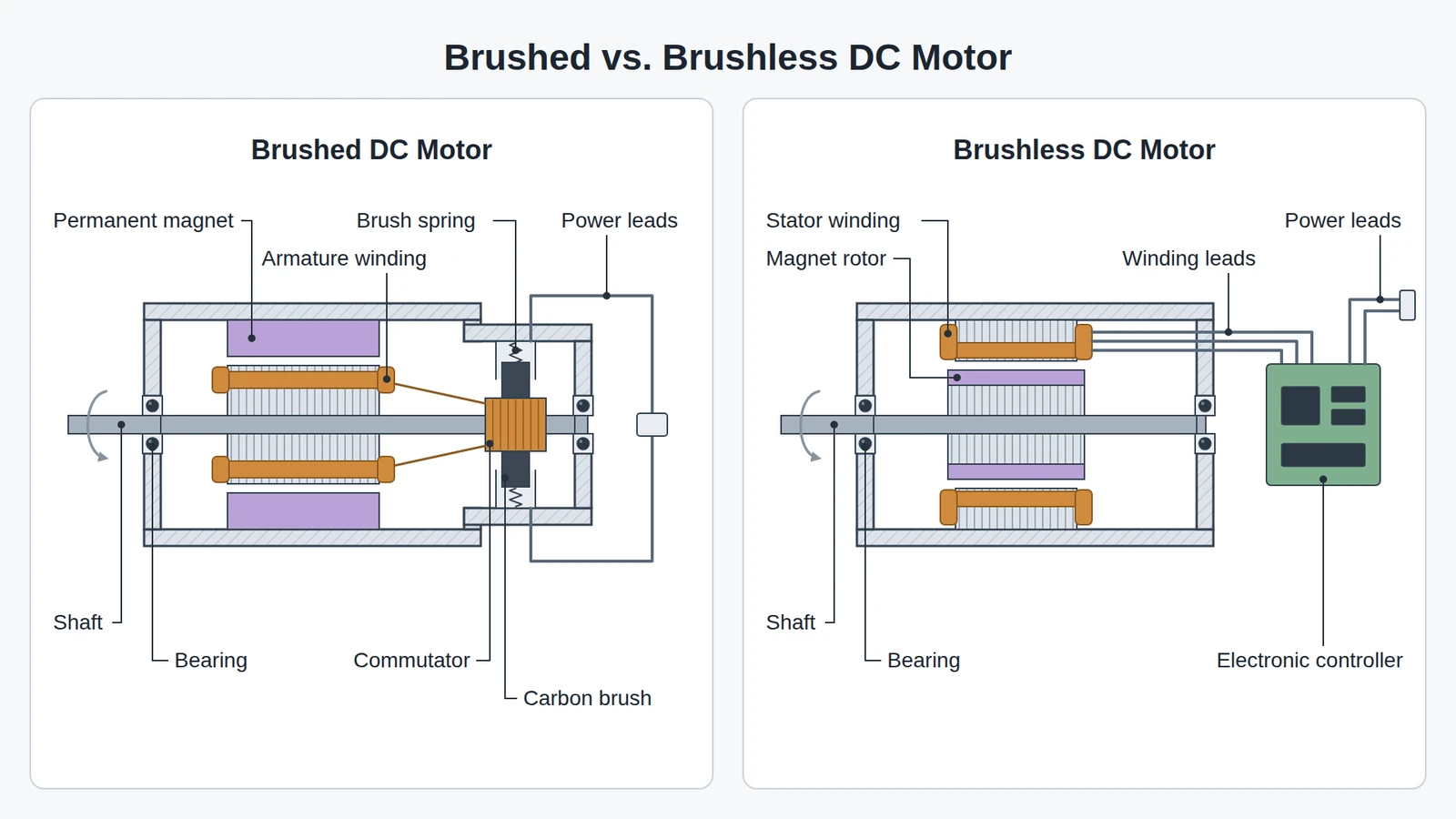
Traditional 1000W DC Brush Motors work together to provide power to the pump at 1.8 L/min, but their carbon brush lifespan caps at around 720 hours. Alternatively, a 1500W Smart Brushless DC motor delivers a higher torque with the longest life, outputting 2.2 L/min with zero friction and zero heat attenuation.
Advanced controls on factory equipment automatically regulate process controls utilizing Smart microcomputer control and Zero Deadband logic to completely eliminate spitting. If your machine power is not enough causing pressure drops, moving machine parts fail to slide smoothly, destroying the application.
The GUTUBAO Solution: Spraying Unthinned Latex with Zero Tails
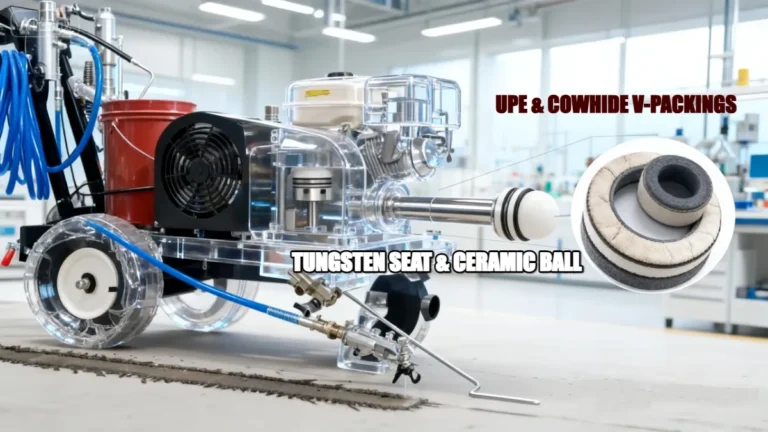
These precision-cut parts require additional machining to provide tighter tolerances, utilizing Japan Brother SPEEDIO CNC centers at 0.01 mm tolerance and German Carl Zeiss CMMs. The robust design features Hardened Stainless Steel and high-durability ceramic-coated rod, paired with UPE & Leather V-Packings for ultimate industrial durability.
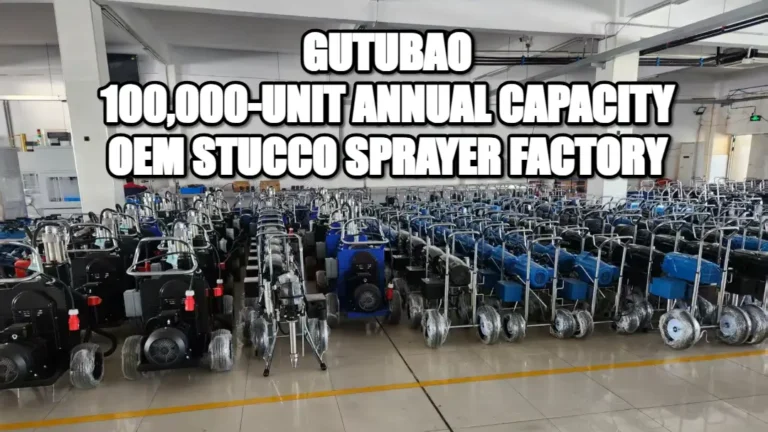
By choosing the GUTUBAO GTB-495 (1500W / 2.2 L/min) with Factory direct wholesale pricing, contractors can confidently spray without tails. With this zero-maintenance 24/7 system, you can expect to be “on the wall” more, having less downtime when thinning latex paint for airless sprayer is completely avoided.