What Size Generator Is Needed to Run a 3000 PSI Electric Airless Paint Sprayer?
What size generator is needed to run a 3000 PSI electric airless paint sprayer? Size the generator to the sprayer motor’s running wattage plus its startup surge — not to the “3000 PSI” rating, which measures fluid pressure, not electrical draw. Pressure is a hydraulic spec. Wattage is the electrical load a generator actually feels. Read the rated running power in watts off the nameplate, then allow for the momentary startup surge that runs higher than the running figure — both numbers, with model-by-model ratings across the GUTUBAO electric line, are worked through in the two-number method below. Choose a generator whose continuous rating clears the running load with headroom to spare. Set the engine to full speed and switch off any eco or idle-control mode, as generator makers advise for intermittent motor loads.
Why “3000 PSI” Tells You Almost Nothing About Generator Size
A generator calculator that keys off “3000 PSI” oversizes the rig, because pressure and power are different physics. Pressure is hydraulics. Generator sizing is electrics.
The pressure rating tells you what the pump can push a coating through the tip. It says nothing about volts and amps. Two units carrying the same pressure class can pull very different wattage, because wattage tracks the motor and the flow rate, not the number stamped on the pressure gauge. Chase the pressure figure into a sizing tool and it hands back a generator far larger than the job needs — the exact “buy a bigger unit” answer that generator sellers are happy to give.
Work the other way. Start from the electrical load the motor draws, and the generator shrinks to a sensible size. That single shift — from a fluid spec to a power spec — is where most oversizing errors end.
What Size Generator Is Needed to Run a 3000 PSI Electric Airless Paint Sprayer: The Two-Number Method
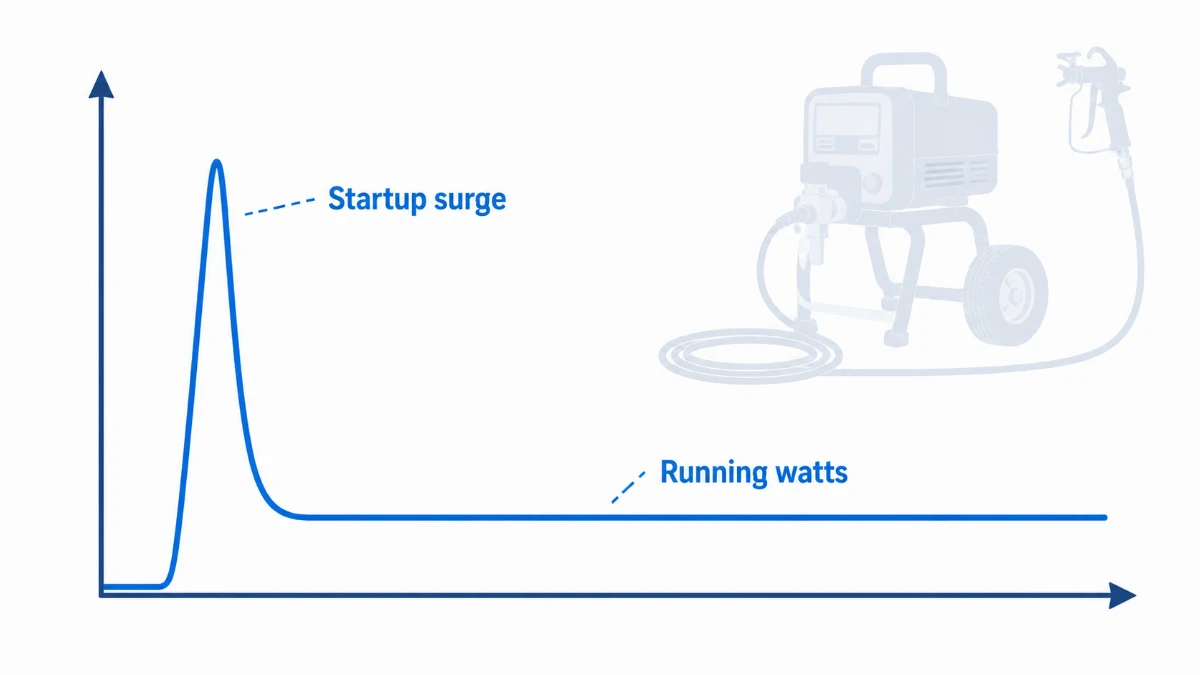
Two numbers size the generator: running watts and startup surge. Get both and the guesswork is over.
Running watts is the steady load the motor pulls once the pump is cycling; it sits on the nameplate as the rated running power in watts. Startup surge is the brief spike the motor pulls to overcome inertia and spin up under load. Generator-sizing references put that starting surge at two to six times running watts as general guidance for motor loads — treat the multiple as a planning envelope from that source, then confirm the real figure against your own unit’s nameplate or measured starting current, or ask the manufacturer. The generator has to swallow the surge on top of whatever else is already running, or it sags, stalls, or trips.
Here is the running-wattage span across the GUTUBAO electric line, as a reference for the size band you are working in. Wattage climbs with the flow rate and the motor behind it — not with the pressure label. These are documented ratings; read your own unit’s nameplate for the rated running watts and voltage that matter on site.
| Model | Running power | Max flow |
|---|---|---|
| GTB-395 | 1,000 W | 2.0 L/min |
| GTB-495 | 1,500 W | 2.2 L/min |
| GTB-595 | 2,200 W | 2.5 L/min |
| GTB-935 | 2,500 W | 3.5 L/min |
| GTB-950 | 3,500 W | 5.0 L/min |
| GTB-980 | 4,000 W | 8.0 L/min |
| GTB-8900 | 4,000 W | 10 L/min |
Work an example off the table. A 2,500 W unit pulls 2,500 W running; its startup surge momentarily demands a multiple of that. Size the generator’s continuous rating above the running load with headroom — generator-sizing guidance runs 10 to 25 percent — and confirm the generator’s peak or surge rating clears the startup spike. A generator sized only to the running watts, with no surge headroom, is the one that trips the moment the pump kicks on.
What a Brushless Motor Does — and Does Not — Change
Motor type matters, but not in the way sizing shortcuts suggest. The GUTUBAO electric line runs both kinds: brushed DC on the GTB-395 and 490, brushless on the GTB-495 and 595.
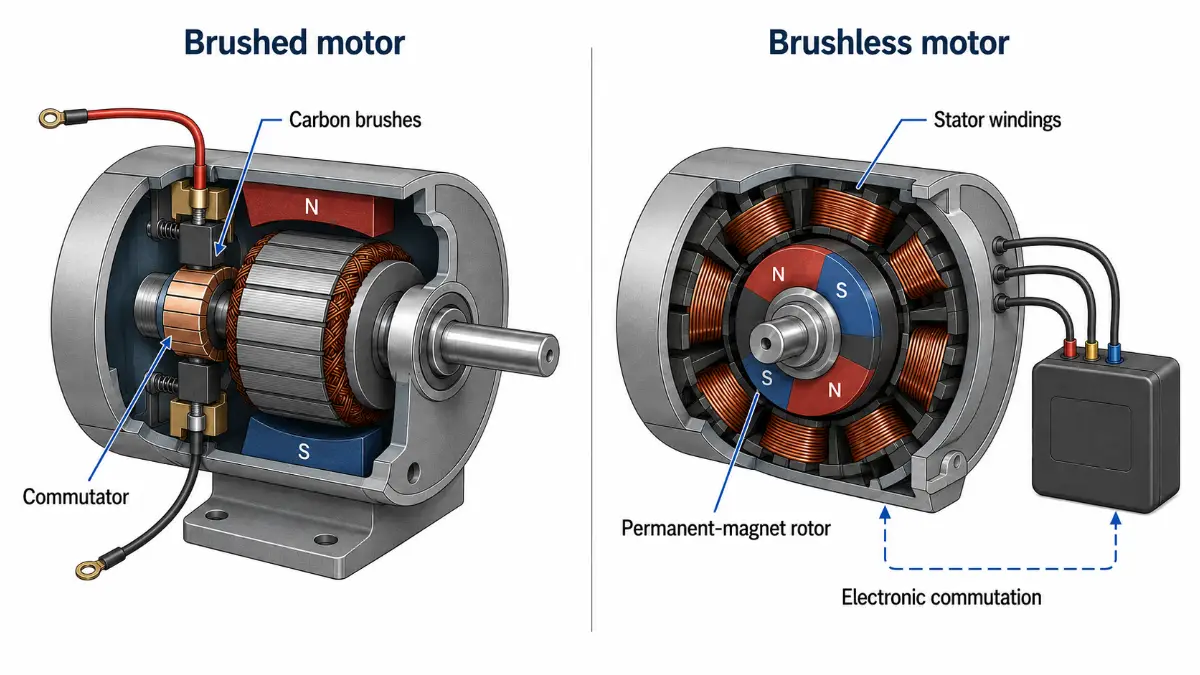
A brushless drive runs at higher efficiency, holds torque steadily under sustained load, and has no carbon brushes to wear down — the service-life and running-behavior angle covered in brushless and brushed airless sprayers. No brushes to burn. Fewer wear parts to service.
None of that changes the sizing method. Whatever the motor type, read the rated running watts off the nameplate, allow for the startup surge, and size the generator the same way. The nameplate decides, not the motor label.
Why You Must Turn Off Your Generator’s Eco Mode
Eco mode saves fuel. It also fits a paint sprayer badly.
Idle control — sold as Eco-Throttle, Smart Throttle, or Economy Mode — drops the engine to low speed under light load, then ramps back up when demand lands. Generator makers themselves draw the line here: Caterpillar’s guidance for its portable units is to switch idle control off when running tools that draw power intermittently, or multiple large loads, to avoid stalling the engine.
A paint sprayer is exactly that kind of load. The pump cycles on and off against the pressure setting, so the generator never sees a steady draw — it sees a motor that keeps arriving unannounced. From an electrical standpoint the risk follows directly: if the engine is idling at the moment the pump calls for power, output can dip.
On the GTB-9 series, the main control board carries undervoltage protection (fault 170U) and overvoltage protection (fault 380U). If generator output sags below the protection threshold, the controller makes a protective stop — a cutoff, not a substitute for stable supply. Run the generator at full speed with eco off, per the maker’s guidance for intermittent loads. For the full set of controller faults and what they signal, see the PCB fault codes.
Sizing the Generator: A Step-by-Step Field Method
Run the numbers once, before the machine leaves the shop. The steps:
- Read the nameplate. Note the rated running power in watts.
- Allow for the startup surge. Use the general motor-load guidance above as a planning envelope, and confirm your unit’s actual figure from the nameplate, a measured starting current, or the manufacturer.
- Set the headroom. Pick a generator whose continuous rating sits above the running watts with the margin covered in the two-number method, and whose peak or surge rating clears the startup spike.
- Match voltage and phase. Confirm the generator output matches the unit’s nameplate voltage and phase — don’t assume, verify on the plate.
- Kill eco mode. Switch off idle control and let the engine run at full speed for the whole job.
- Stagger the big loads. Never start the sprayer and a second motor — a compressor, a heater, a saw — in the same instant. Start them one at a time so the generator handles a single surge at a time.
Anything the nameplate does not give you, verify against your unit’s spec plate and the generator maker’s continuous-rating figure on site. Don’t size on a guess.
Matching the Sprayer to Off-Grid and Remote Work
Remote sites and unpowered new construction are where generators and electric sprayers meet, and where sizing errors cost a shift. On the GTB-9 series, the main control board carries undervoltage and overvoltage protection on the incoming supply.
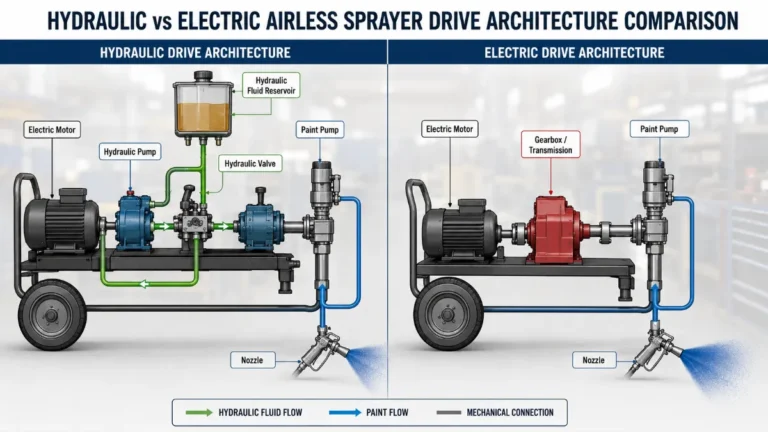
There is a ceiling, though. The portable electric line is rated at a maximum (deadhead) pressure of 3300 PSI, and the GTB-9 series carries a maximum (deadhead) pressure rating of 3300 PSI or 3600 PSI depending on model. For jobs beyond the electric line’s scope — including sites with no electrical supply at all, where the hydraulic line’s petrol-engine variant runs without mains or generator — see the drivetrain trade-off laid out in hydraulic vs electric airless sprayer. Match the machine to the job and the power on hand, not to a spec-sheet headline.
One Source, Built-In Power Protection: Inside the GUTUBAO Electric Line
Generator power is rarely clean, so protection belongs in the machine. The GTB-9 series runs a main control board with undervoltage and overvoltage cutoffs — the safeguard that matters when a jobsite generator sags or spikes. Core parts back it up: pump bodies, motors, and the control PCB are all made in-house by a company founded in 2010, with total investment over $10 million USD, 200-plus CNC machines, and annual capacity of 100,000 units.
Precision holds where it counts. Critical machined metal mating surfaces — cylinder bores, valve-seat bores — are held to ±0.01 mm and verified on a German Carl Zeiss coordinate measuring machine. Quality control is full inspection, not sampling: three process checkpoints, a 4-hour powered burn-in on every board, and a 30-minute high-pressure load test on every finished machine. Reliable behavior on jobsite generator power starts with a machine built to that standard.
Contractors and distributors who source across the range usually want one supplier. Our professional electric airless sprayer line covers the standard-pressure jobs a generator handles well, our portable airless sprayer range suits mobile crews, and our heavy-duty hydraulic airless sprayer line covers the jobs beyond the electric line’s scope — with a petrol-engine option for sites with no mains power at all. NDA-backed OEM and ODM are supported — request a quote with your coating spec, site power profile, and duty cycle.
FAQ
How many watts does a 3000 PSI airless sprayer need to start?
It needs its rated running watts plus a momentary startup surge that runs higher than the running figure. Read the running watts off the nameplate — model-by-model ratings across the GUTUBAO electric line are tabled in the two-number method above — confirm the surge with the manufacturer, and size the generator so its continuous rating clears the running watts and its peak rating clears the surge.
Why do I need to turn off the eco mode on my generator when using a paint sprayer?
Your pump cycles on and off against the pressure setting, so the generator sees an intermittent motor load. Generator makers advise switching idle control off for intermittent-power tools to avoid stalling the engine — and if the engine is idling when the pump kicks in, output voltage can dip. Run the generator at full speed with eco mode off.
Can I run other tools on the same generator as my paint sprayer?
Yes, if the generator’s continuous rating covers the combined running load and its peak rating covers the largest single surge. Stagger the starts: never start the sprayer and another motor load in the same instant, so the generator only handles one surge at a time.
Will a generator that’s too small damage my paint sprayer’s motor?
An undersized generator can sag under load. On the GTB-9 series, the controller’s undervoltage protection responds to exactly that: if input voltage falls below the threshold, the unit makes a protective stop. The real fix is right-sizing the generator, not leaning on the cutoff.
Does a brushless airless sprayer need a smaller generator than a brushed one?
Size both the same way: rated running watts off the nameplate, plus the startup surge. The documented brushless advantages — higher efficiency, steady sustained torque, no carbon brushes to wear — concern running behavior and service life, not a published sizing shortcut. The nameplate and the surge check decide the generator, whatever the motor type.