Air vs Airless Paint Sprayer: A Contractor’s Engineering Decision Guide
An air vs airless paint sprayer choice comes down to three engineering variables: how the coating is broken into droplets, how much of it lands on the surface, and the viscosity the material can hold without thinning. Air spray uses compressed air to atomize paint in a second step outside the tip. Airless forces fluid through a small orifice under high pressure and tears it into a fan with no air at all. Compressed-air guns give a fine, soft finish on small or detailed work but waste more to overspray. Airless covers large surfaces fast and sprays high-viscosity coatings with little or no thinning. Pick by job size and coating type. Big steel, bridges, and commercial walls go airless. Fine furniture-grade finishing stays with air.
Most comparison content stops at one line: small jobs use air, big jobs use airless. That advice skips the engineering account a contractor actually pays — material burned to overspray, hours lost to thinning and recoating, finishes that fail the spec. This guide treats the air vs airless paint sprayer question as a cost-and-mechanism decision, not a preference.
The Real Cost of Picking the Wrong Sprayer
Pick the wrong atomization method and the cost is not cosmetic. Money leaks by the hour. A compressed-air gun on a large warehouse wall throws a wide overspray cloud, and paint that never reaches the substrate is paint you bought and binned. Run pure airless on a small detailed cabinet and the finish lands heavier and coarser than the part needs.
Most crews feel this as a vague “it sprayed badly” complaint. Two variables actually drive it: transfer efficiency — the share of sprayed coating that bonds to the surface — and the viscosity ceiling each method handles without thinning. Get both wrong and an air vs airless sprayer mismatch bleeds money before the first coat cures.
Exact transfer-efficiency numbers depend on the gun, the coating, and the operator. Verify against your coating manufacturer’s data sheet on-site before you bid a job on overspray assumptions.
Atomization Mechanism: Compressed Air vs Hydraulic Fluid-Cut
Both methods turn liquid coating into a spray. They do it on opposite physics.
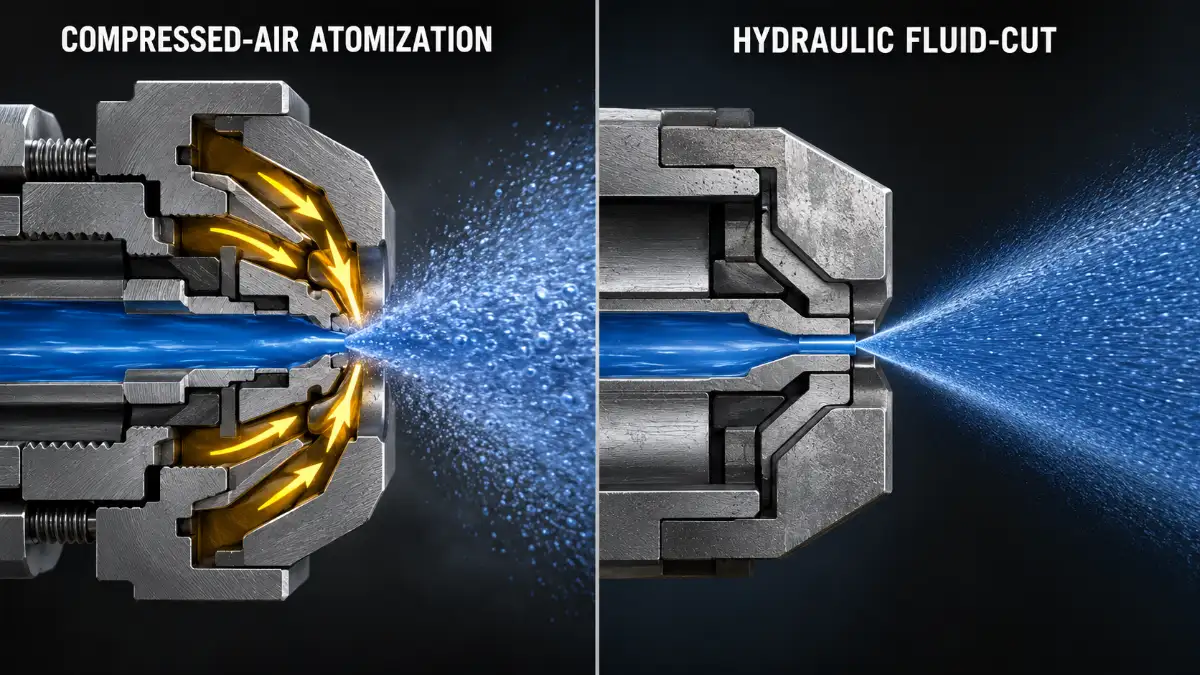
A compressed air sprayer feeds paint to the gun at low pressure, then blasts it with a separate stream of compressed air at the cap. Air shears the fluid into fine droplets outside the tip. You get a soft, controllable pattern — and plenty of bounce-back, because the same air that atomizes the paint also drives a fog of it past the target.
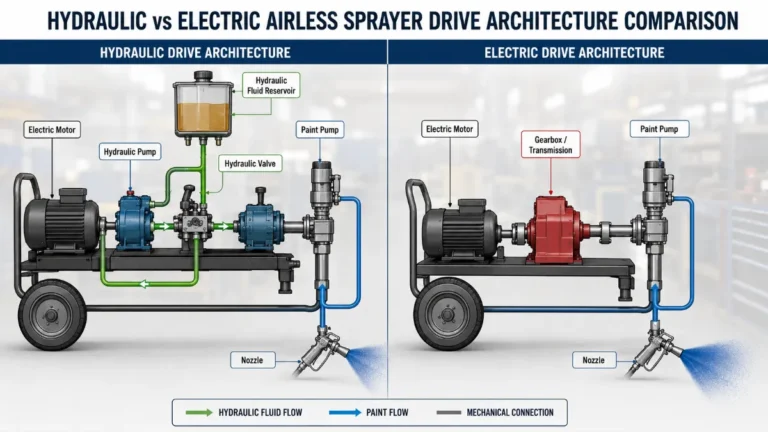
High-pressure airless skips the air entirely. A pump pushes fluid through a precision airless spray tip, and the stream tears itself into a fan the instant it leaves the orifice. This is hydraulic atomization — fluid-cut — and it needs no compressed air to form the pattern.
Droplet control versus throughput — that is the practical split. Air atomization makes finer droplets and a gentler edge, which is why it still owns fine-finish work. Fluid-cut puts more coating on the wall per minute and handles thicker material, because atomization does not depend on a fragile balance of air and fluid flow. For how that pump principle plays out inside the machine, see our breakdown of piston pump vs diaphragm pump designs.
Transfer Efficiency and the Overspray Bill
Transfer efficiency is the number that quietly sets your material budget. It is the percentage of sprayed coating that actually lands and stays on the surface; the rest drifts off as overspray.
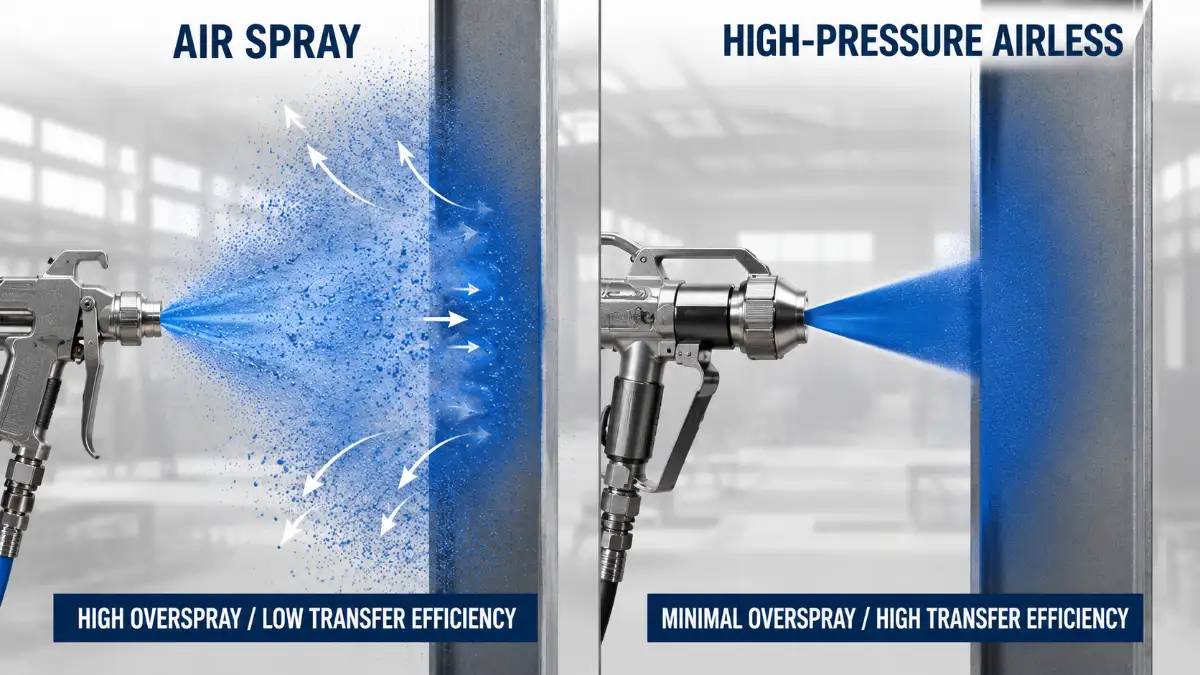
Compressed-air atomization runs lower transfer efficiency than airless on large flat surfaces, because the atomizing air carries fine droplets past the substrate. On a big exterior or a structural-steel job, that gap compounds: every gallon sprayed at low efficiency is a fraction of a gallon you paid for and never applied, plus the labor to reload, remask, and recoat.
Airless lifts transfer efficiency on broad surfaces by dropping the air stream out of the equation. More wall, less fog. Fewer trips to the bucket. The economic case for air spray painting vs airless sprayer selection is not the machine’s sticker price — it is the running cost of wasted material across a contract.
We do not publish a fixed efficiency percentage here, because it shifts with coating, pattern, and technique. For independent, coating-lab context, KTA’s independent conventional-versus-airless transfer-efficiency data is a neutral reference. Confirm the real figure against your own coating’s data sheet on the job.
Sprayable Viscosity: Thinning vs Direct High-Build
Viscosity is where the two methods part hardest. A compressed-air gun needs the coating thin enough for air to shear it, so high-build and heavy-bodied materials usually get thinned before they will spray. Thinning adds a step, adds solvent, and on many coatings raises VOC — a compliance and cost problem on industrial sites.
Airless sprays high-viscosity coatings closer to as-supplied, with little or no thinning, because pressure does the atomizing instead of air. That keeps film build per pass higher and cuts the solvent you add and later have to account for.
One caution. “Sprays thick paint” is not a blank check — every coating still has a workable range, and tip size has to match. Match the tip to the material with our airless spray tip size chart, then verify the coating’s sprayable viscosity against its data sheet on-site.
Air vs Airless Paint Sprayer: Where Each One Wins on the Job Site
Match the method to the job, not to habit. No gun wins everywhere. Here is how the two sort out across common industrial work.
| Factor | Compressed-Air Spray | High-Pressure Airless |
|---|---|---|
| Atomization | Air shears fluid outside the tip (secondary) | Pressure tears fluid at the tip (fluid-cut) |
| Finish quality | Finest, softest edge | Strong on broad surfaces, coarser on fine detail |
| Coverage speed | Slower; small-area focused | Fast; built for large surfaces |
| Transfer efficiency | Lower on large flats (more overspray) | Higher on broad surfaces |
| Sprayable viscosity | Lower; usually needs thinning | Higher; sprays high-build with little thinning |
| Best project scale | Fine, detailed, low-volume | Steel, bridges, marine, commercial walls |
| Cost driver | Material lost to overspray | Pump and tip wear over throughput |
Air-assisted airless — a third category that adds a trickle of shaping air to an airless pattern — sits between the two and is its own discussion; this guide does not cover it, and GUTUBAO does not build air or air-assisted equipment.
Where the line falls is mostly scale and coating body. Fine furniture-grade panels, touch-ups, and detailed parts favor air. Structural steel, bridge spans, marine hulls, and large commercial elevations favor airless. The matrix does not change with brand — it changes with the physics of how each gun makes a droplet. To draw the third boundary against another low-pressure method, our airless paint sprayer vs HVLP breakdown does it cleanly.
Three Mistakes Contractors Make Choosing Between Air and Airless
Three errors show up on bid sheets and job sites more than any others.
- Running air on large-area work. The fine finish is real, but on a warehouse or steel structure the overspray and slow coverage burn material and hours. For broad coverage, airless wins on throughput.
- Forcing airless onto furniture-grade detail. A high-pressure fan is built for area, not for the softest possible edge on a cabinet door. The result is acceptable, not exceptional — match the method to the finish spec.
- Treating air-assisted as a do-everything fix. Air-assisted airless blends traits of both, but it is a distinct category with its own trade-offs — not a shortcut around choosing correctly. Decide on coating and scale first.
Each mistake traces back to the same root: choosing by habit or sticker price instead of by atomization mechanism, transfer efficiency, and viscosity.
Why GUTUBAO Backs the Airless Side of the Equation
Once a contractor commits to airless, the variable that decides uptime is pump quality — not the marketing on the box. That is where our shop earns its place.
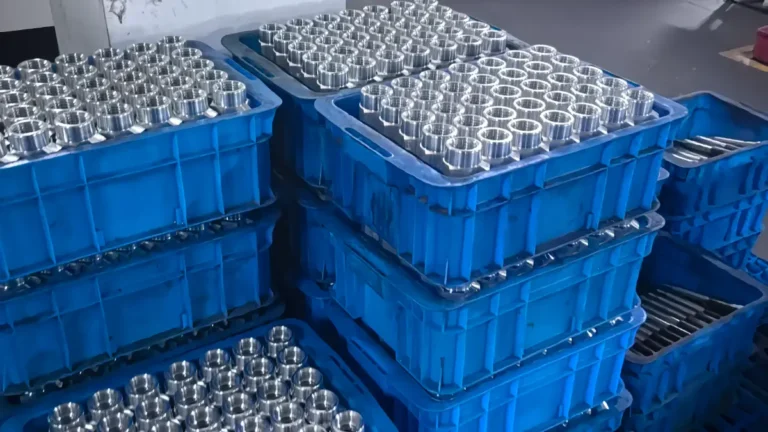
GUTUBAO has built spraying equipment since 2010. We machine our fluid sections on 200-plus CNC machines and check critical geometry on a Carl Zeiss coordinate measuring machine, holding ±0.01mm tolerance on the key machined metal mating surfaces where it counts — cylinder bores and valve-seat seats, not every loose part. Core components — pump bodies, motors, control PCBs — are 100% made in-house.
Every machine runs a two-part proof before it ships:
- The control PCB gets a 4-hour powered burn-in to weed out early electronic failure.
- The assembled unit runs a 30-minute continuous high-pressure load test on the line.
On top of that, every unit passes three-stage process inspection — first-piece, in-process, and final — full inspection rather than sampling. That discipline is why GUTUBAO holds roughly 70% of its domestic market and exports to dozens of countries. Our industrial airless paint sprayers are built to keep running where overspray and downtime cost the most.
FAQ
Air spray painting vs airless sprayer — which wastes less paint?
Airless. On large flat surfaces it runs higher transfer efficiency, so less coating drifts off as overspray. Compressed-air guns atomize with an air stream that carries fine droplets past the substrate, raising waste on big jobs. Confirm the exact figure against your coating’s data sheet.
Air paint sprayer vs airless paint sprayer: which one needs a compressor?
The air paint sprayer side needs a separate compressed-air supply to atomize the coating. Airless does not — its pump generates the pressure that breaks up the fluid, so no compressor is required for atomization.
Which sprayer handles thick paint without thinning?
Airless. High pressure atomizes high-viscosity coatings with little or no thinning, which cuts added solvent and VOC. Air spray usually needs the material thinned first. Every coating still has a workable range, so match tip size to the product.
What is a compressed air sprayer actually best for?
A compressed air sprayer is best for fine, detailed, low-volume finishing — furniture-grade panels, touch-ups, precision parts — where droplet control matters more than coverage speed. It is not the efficient choice for large industrial surfaces.
Air vs airless sprayer: which produces more overspray?
Compressed-air spray produces more overspray on large surfaces, because the atomizing air pushes a fog of fine droplets past the target. Airless concentrates more coating on the surface. On detailed small work the gap narrows.